
INDUSTRY: MATERIALS
Thin-film deposition via vacuum processes
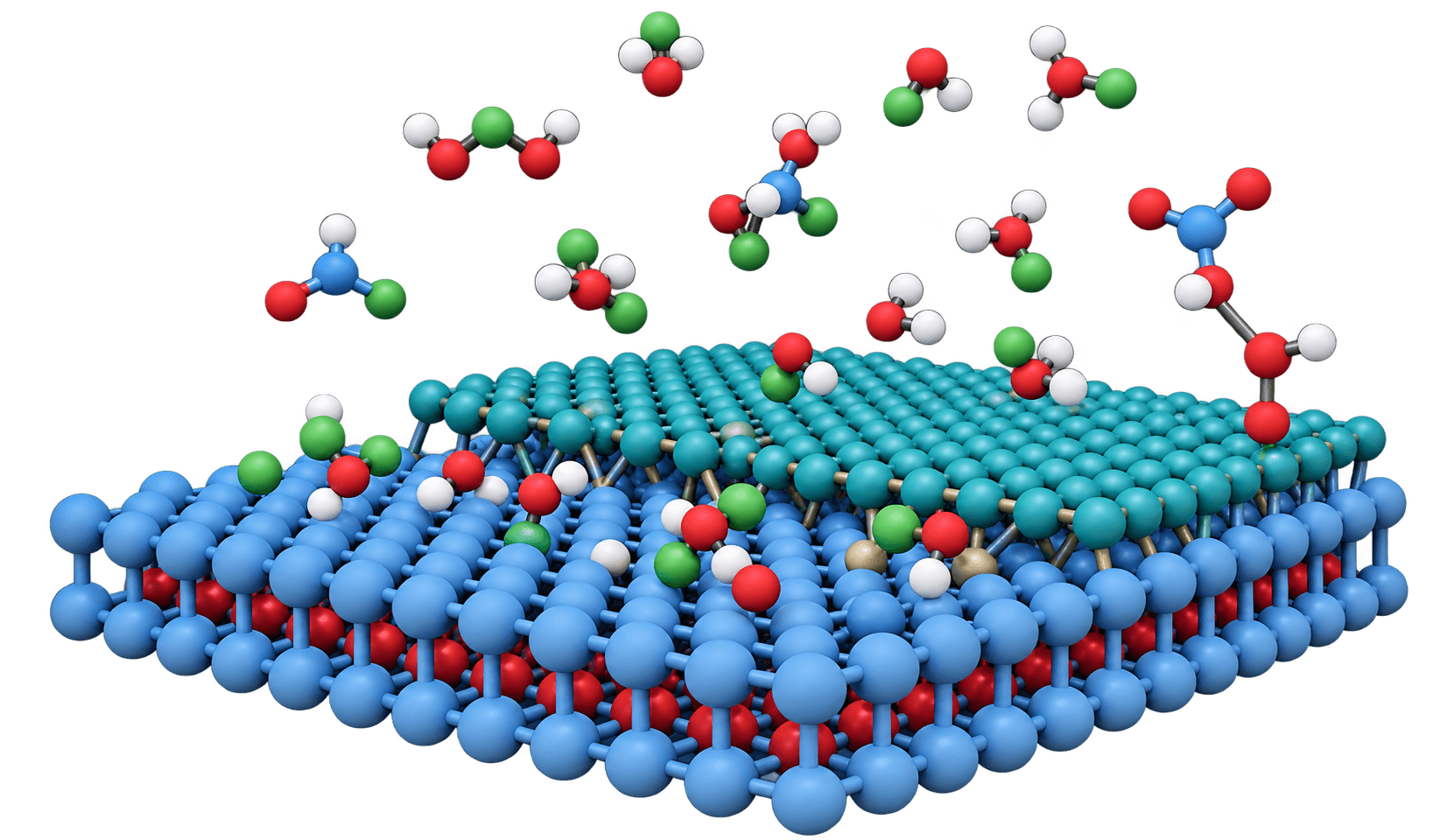
On our platform, we model vacuum deposition techniques (evaporation, sputtering, surface treatment) at the atomic scale. Anticipate the structure, adhesion, and defects of your thin films to target the right lab trial on the first try.
- Extensive library of elements (metals, alloys, oxides, reactive gases...)
- Interactive 3D visualization of thin-film growth
- Structural characterization (radial distribution, X-ray diffraction)
What can we do?
From simulation to real-world impact
Advanced materials modeling for better-informed decisions.
Thin-film deposition
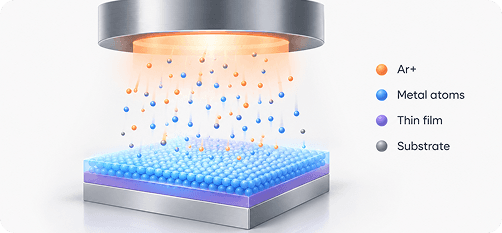
Simulate thin-film deposition via magnetron sputtering and thermal evaporation.
Surface treatments
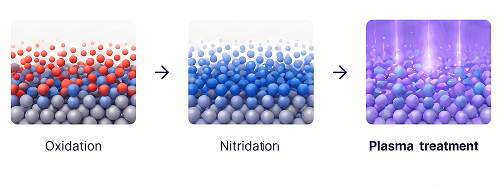
Study surface treatments, including oxidation, nitriding, and reactive plasma processes.
Monitoring crystalline structures
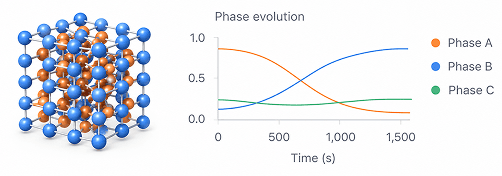
Identify the local crystalline structure of atoms during deposition.
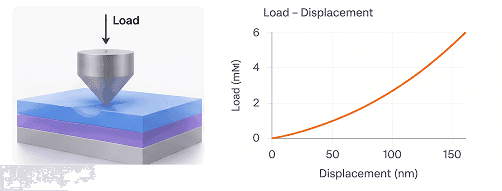
Mechanical properties
Predict the mechanical properties of new materials using nanoindentation simulations.
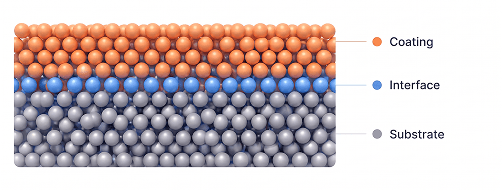
Interfaces and adhesion
Analyze interfaces and adhesion between substrates and coatings.
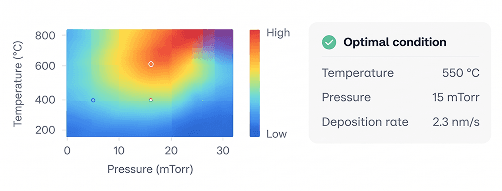
Process optimization
Identify optimal parameter combinations to improve material deposition and treatment conditions.
Why
MS4Materials?
Accelerating R&D in materials science through predictive atomic simulation.
Innovative design
Design and optimize advanced materials even before physical fabrication.
Predictive analysis
Virtually evaluate your materials' performance to guide decisions prior to physical manufacturing.
Cost reduction
Minimize empirical trial-and-error testing and significantly reduce development costs.
Decision-support reports
Export comprehensive simulation reports to inform your research or industrial decisions.
A SaaS platform accessible to everyone
Choose the process
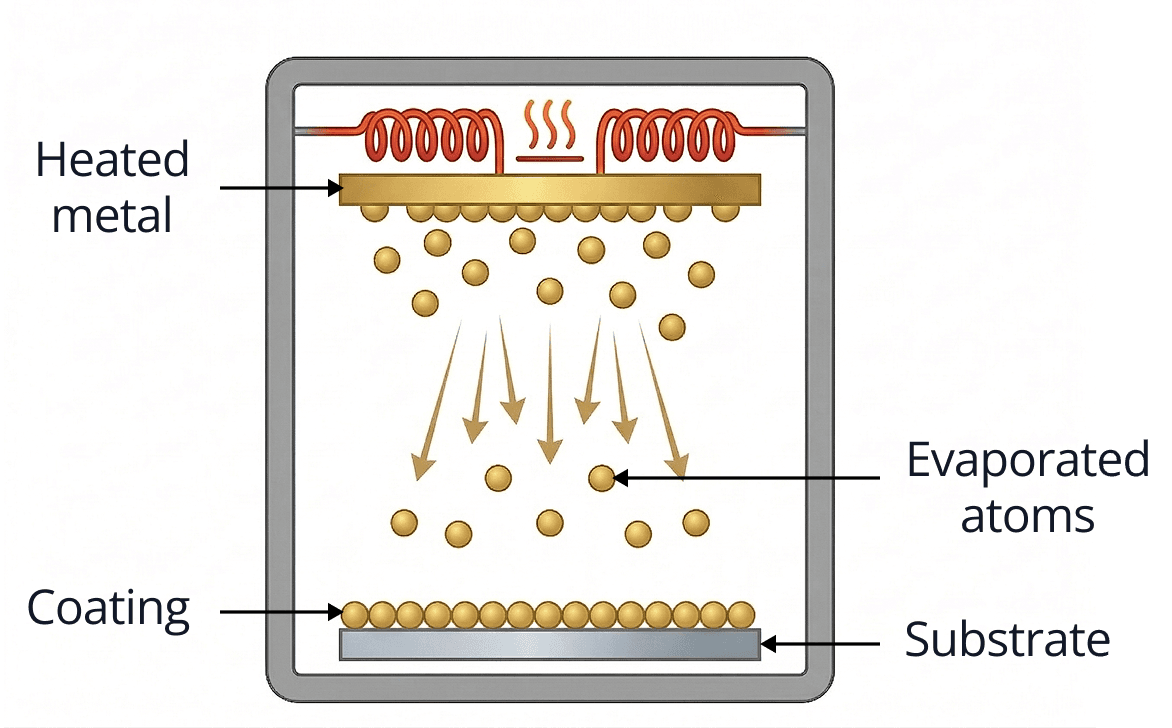
Thermal evaporation involves heating a source material to its vaporization point inside a vacuum chamber. The evaporated atoms then travel toward the cooler substrate and condense onto it. Our simulation models particle kinetic energy and lets you observe thin-film nucleation.
Use our interactive periodic table featuring all 92 natural elements to define your materials. Select the exact composition of your substrate and coating, then fine-tune the ratios to model custom alloys.
Adjust thermal parameters and vacuum chamber properties to accurately replicate your deposition environment. Define pressure, temperatures, and geometry to precisely control molecular dynamics.
Dive into the heart of matter with our interactive rendering engine. Observe the nucleation and growth of your thin film atom by atom. Switch to PTM (Polyhedral Template Matching) analysis to instantly identify the crystalline structures forming at your material interfaces (Amorphous, FCC, BCC, etc.).
Chart (1) - X-ray diffraction
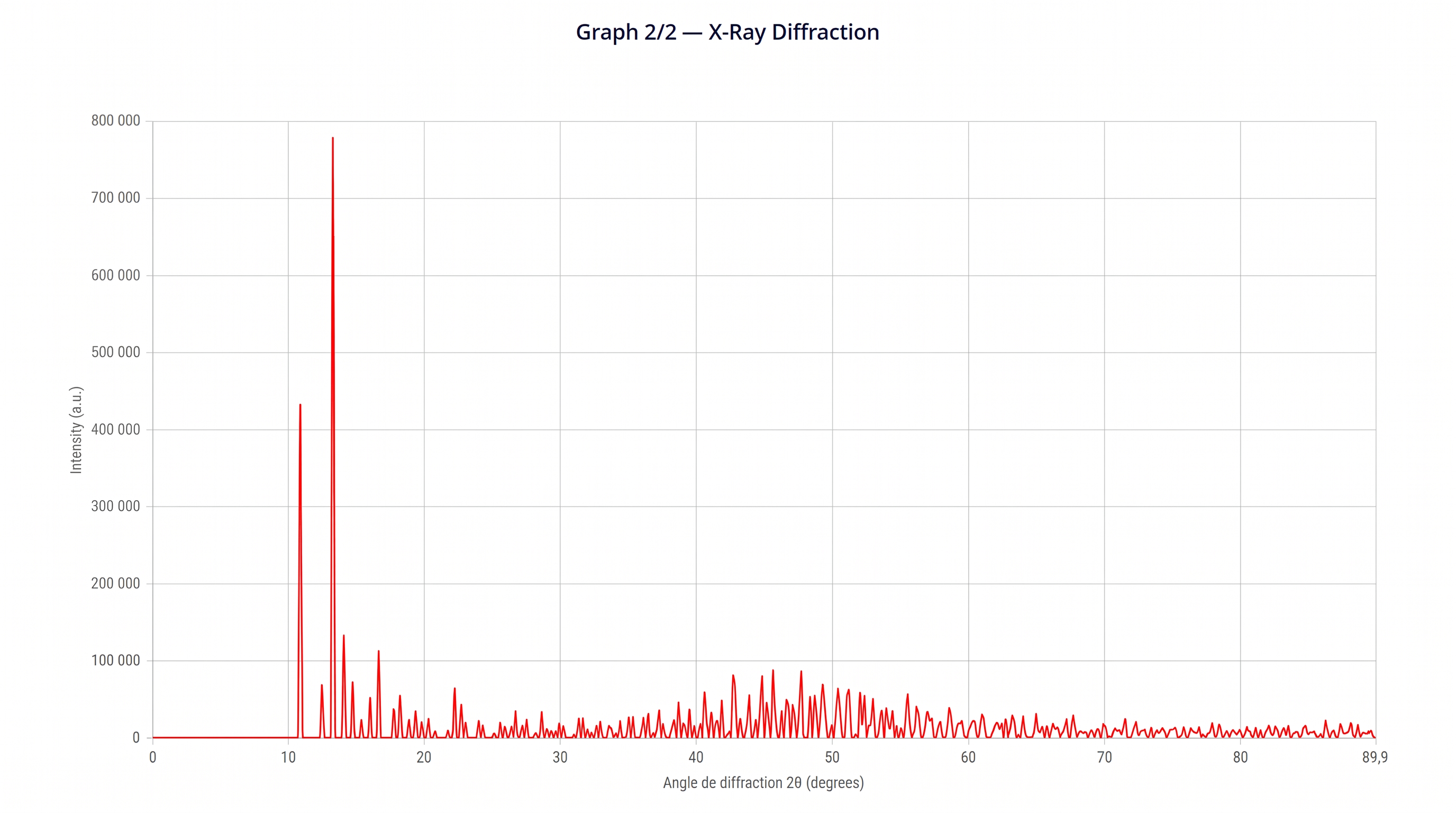
Chart (2) - Radial distribution
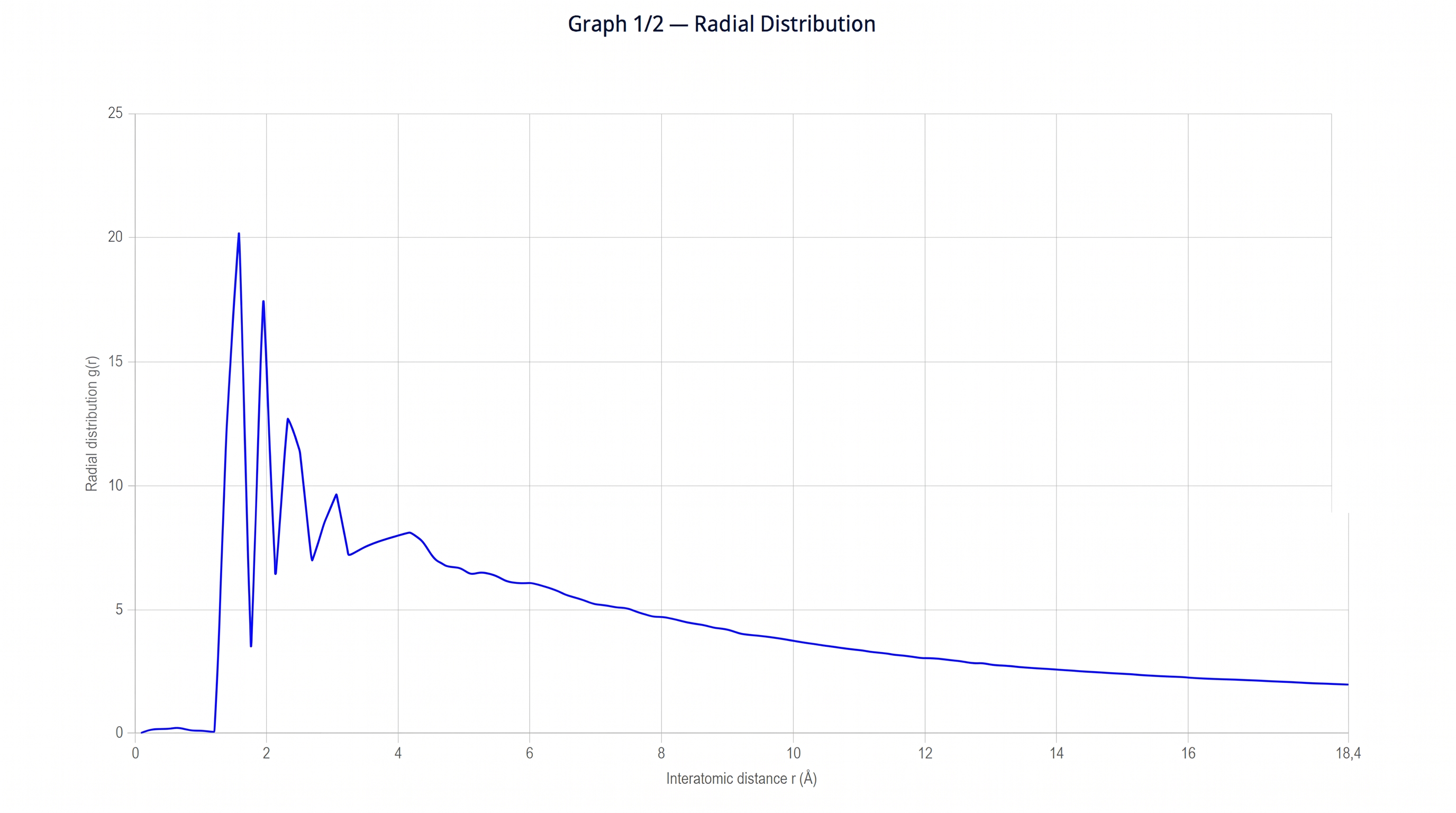
Take your study further by evaluating deposit quality using real-time radial distribution plots and XRD (X-ray diffraction) spectra. Export all your key structural data in a single click.
Target industries
Key industry sectors
Advanced modeling solutions tailored to the demands of cutting-edge industries.

Aerospace & Defense

Automotive
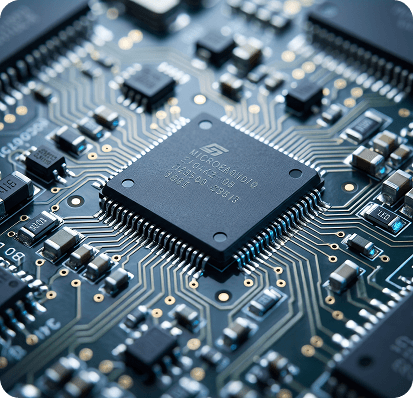
Semiconductors

Energy
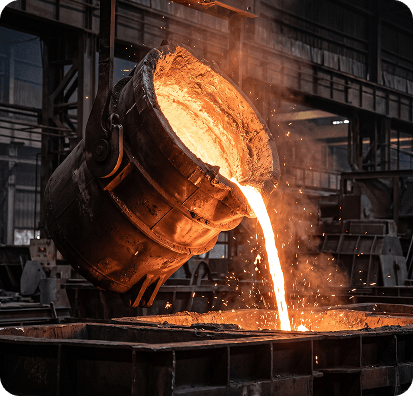
Metallurgy
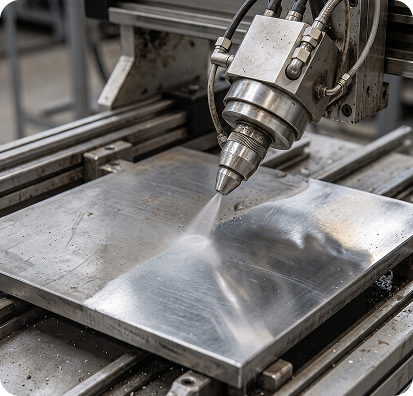
Functional coatings
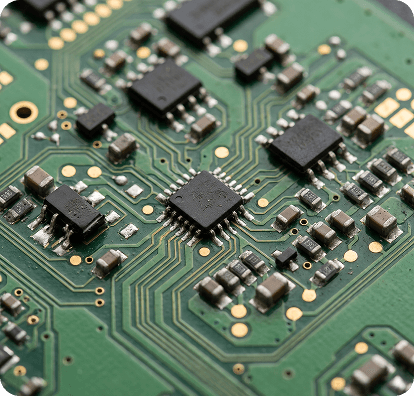
Electronics
Frequently Asked Questions
Do I need simulation expertise to use the platform?
No. The platform is designed to be used without advanced simulation expertise: you choose a molecule and a process, and we handle the calculations. Our team can support you with complex cases.
Do I need to install software?
No. The platform is accessible directly from your browser, with no installation required. All you need is an account to launch your simulations.
Does simulation replace experimentation?
No. Simulation is a decision-support tool that helps prioritize tests and reduce the number of experiments. It complements experimentation; it does not replace it.
Are your models reliable?
Yes. Our models are developed from scientific literature and experimentally validated. Results are compared against reference data and can be exported for your analyses.